
Essential Product Manager Skills

The role of a product manager is one of the most crucial and dynamic positions within an organization. Product managers connect various departments, ensuring that a product not only meets market demands but also aligns with the company’s strategic goals.
This article delves into the essential skills that a great product manager holds.
If you’re interested in learning more via video, then watch below. Otherwise, skip ahead.

Whether you’re an aspiring product manager or a seasoned professional looking to refine your capabilities, understanding these key competencies will help you navigate the challenges and opportunities in this exciting field.
Essential Product Manager Skills
Let’s take a look at the top 10 skills a product manager should have to build outstanding products.
1. Outstanding Communication Skills
Product managers are the product champions and are responsible for guiding product ideas from start to finish.
They should be able to effectively communicate with different stakeholders (e.g., customers, and product team members) to make sure they understand how their decisions will affect the product or business strategy.
Communication skills help a product manager establish credibility, listen to their product team, and create a shared understanding of business objectives for the product.
Product managers must leverage their technical knowledge and critical thinking to translate complex ideas into actionable plans.
In product management, communication skills are a fundamental component of a product manager’s success. Effective communication is one of the essential product manager soft skills that involves conveying the product vision, goals, and requirements to diverse stakeholders.
Wie Umsatzbedingungen bei Casino Boni laut Casinoc01 wirklich funktionieren
Wer sich mit Online-Casinos beschäftigt, stößt unweigerlich auf Bonusangebote: Willkommenspakete, Freispiele, Einzahlungsboni und Treueprogramme locken Spieler mit scheinbar großzügigen Beträgen. Doch hinter jedem Bonus verbirgt sich ein rechtliches und rechnerisches Konstrukt, das viele Spieler erst dann vollständig verstehen, wenn sie versuchen, ihre Gewinne auszuzahlen. Die sogenannten Umsatzbedingungen – auf Englisch als „Wagering Requirements” bezeichnet – sind das Herzstück jeder Bonusvereinbarung und entscheiden darüber, ob ein Bonusbetrag jemals in echtes, auszahlbares Geld umgewandelt werden kann. Dieser Artikel erklärt, wie diese Mechanismen technisch und mathematisch funktionieren, welche regulatorischen Entwicklungen die Branche in den letzten Jahren geprägt haben und worauf Spieler konkret achten sollten, bevor sie einen Bonus akzeptieren.
Was Umsatzbedingungen tatsächlich bedeuten – jenseits der Marketingsprache
Der Begriff „Umsatzbedingung” klingt zunächst harmlos, verbirgt aber eine präzise mathematische Anforderung. Wenn ein Casino einen Bonus von 100 Euro mit einem Umsatzfaktor von 35x anbietet, bedeutet das, dass der Spieler insgesamt 3.500 Euro an Wetteinsätzen platzieren muss, bevor der Bonusbetrag – oder in manchen Fällen der Bonus plus die Einzahlung – als Echtgeld gilt. Bei einem Faktor von 50x auf Bonus plus Einzahlung bei einer Einzahlung von 100 Euro und einem Bonus von 100 Euro ergibt sich eine Umsatzanforderung von 10.000 Euro. Das ist keine Ausnahme, sondern war bis etwa 2018 in vielen europäischen Märkten die Norm.
Entscheidend ist auch, welche Spiele zur Erfüllung der Umsatzbedingungen beitragen. Die meisten Casinos gewichten Spielkategorien unterschiedlich: Spielautomaten zählen in der Regel zu 100 Prozent, während Tischspiele wie Blackjack oder Roulette häufig nur zu 10 bis 20 Prozent angerechnet werden. Video-Poker liegt oft bei 20 bis 50 Prozent. Das bedeutet, dass ein Spieler, der ausschließlich Blackjack spielt, bei einem Umsatzfaktor von 35x und einer Gewichtung von 10 Prozent faktisch 35.000 Euro umsetzen müsste. Diese Informationen stehen zwar in den Bonusbedingungen, sind aber häufig in langen AGB-Texten vergraben, die kaum jemand vollständig liest.
Hinzu kommt das Konzept des „Bonus Abuse Trackings”. Moderne Casino-Plattformen nutzen Algorithmen, die das Spielverhalten während einer aktiven Bonusphase analysieren. Spielt ein Nutzer ausschließlich Spiele mit niedrigem Hausvorteil und hoher Auszahlungsquote – etwa bestimmte Blackjack-Varianten mit einem theoretischen RTP (Return to Player) von über 99 Prozent –, kann das Casino den Bonus sperren oder den Auszahlungsantrag ablehnen. Diese Praxis ist rechtlich umstritten, wird aber von vielen Anbietern in ihren Nutzungsbedingungen als zulässig ausgewiesen. In Großbritannien hat die UKGC (UK Gambling Commission) seit 2019 deutlich strengere Anforderungen an die Transparenz solcher Klauseln gestellt.
Ein weiterer oft übersehener Aspekt ist die zeitliche Begrenzung. Umsatzbedingungen gelten selten unbegrenzt. Typische Fristen liegen zwischen 7 und 30 Tagen nach Bonusaktivierung. Wer die Anforderungen in dieser Zeit nicht erfüllt, verliert sowohl den Bonus als auch alle damit erzielten Gewinne. Bei einem Umsatzfaktor von 40x und einem Spielbudget von 20 Euro pro Sitzung wäre es rechnerisch kaum möglich, 4.000 Euro innerhalb von sieben Tagen umzusetzen, ohne erhebliche Verluste zu riskieren.
Regulatorische Entwicklungen und ihre Auswirkungen auf Bonusstrukturen
Die Regulierung von Casino-Boni hat sich in Europa seit 2015 erheblich verändert. In Schweden führte die Glücksspielreform von 2019 dazu, dass lizenzierte Anbieter pro Spieler und Tag nur noch einen einzigen Bonus anbieten dürfen, und dieser muss klar kommuniziert werden. Die schwedische Spelinspektionen verhängte zwischen 2019 und 2022 Bußgelder in Höhe von insgesamt über 100 Millionen Schwedischen Kronen gegen Anbieter, die gegen Bonusregeln verstoßen hatten. In Deutschland hat der Glücksspielstaatsvertrag 2021 ebenfalls neue Rahmenbedingungen geschaffen: Bonusangebote müssen transparent ausgewiesen werden, und Umsatzbedingungen dürfen bestimmte Schwellenwerte nicht überschreiten – wobei die konkrete Ausgestaltung den Anbietern noch erheblichen Spielraum lässt.
Malta, als Sitz der Malta Gaming Authority (MGA), ist für viele europäische Online-Casinos der bevorzugte Lizenzstandort. Die MGA überarbeitete ihre Bonus-Richtlinien im Jahr 2018 grundlegend: Seitdem müssen alle Bonusbedingungen in einer standardisierten, leicht verständlichen Form präsentiert werden. Anbieter sind verpflichtet, den Gesamtbetrag, den ein Spieler umsetzen muss, in absoluten Zahlen anzugeben – nicht nur als Multiplikator. Diese Änderung hat in der Praxis dazu geführt, dass viele Anbieter ihre Umsatzfaktoren gesenkt haben, um die tatsächlichen Anforderungen weniger abschreckend wirken zu lassen. Ein Faktor von 25x klingt weniger einschüchtigend als „Sie müssen 2.500 Euro umsetzen”.
Die britische UKGC geht noch weiter: Seit dem Update der Licence Conditions and Codes of Practice (LCCP) im Jahr 2019 müssen Anbieter sicherstellen, dass Bonusbedingungen „fair und transparent” sind und nicht dazu führen, dass Spieler irregeführt werden. Mehrere Anbieter haben daraufhin ihre Bonusprogramme komplett überarbeitet. Einige, darunter bekannte Marken wie Casumo und LeoVegas in bestimmten Märkten, haben den Umsatzfaktor auf 20x oder darunter gesenkt. Andere haben sogenannte „No-Wagering”-Boni eingeführt, bei denen Gewinne aus Freispielen direkt als Echtgeld gutgeschrieben werden – ohne weitere Umsatzanforderungen. Diese Entwicklung ist jedoch nicht flächendeckend und hängt stark vom jeweiligen Lizenzmarkt ab.
Für Spieler in Deutschland ist die Situation besonders komplex, da der Markt seit 2021 reguliert ist, aber viele Anbieter noch unter älteren Lizenzen aus Malta oder Gibraltar operieren und unterschiedliche Standards anwenden. Plattformen wie https://casino-c01.test dokumentieren die aktuellen Bonusbedingungen verschiedener Anbieter und machen die Unterschiede zwischen den Umsatzfaktoren vergleichbar, was für Spieler eine nützliche Orientierungshilfe darstellt. Die Unterschiede zwischen einzelnen Anbietern können erheblich sein: Während Anbieter A einen Faktor von 20x nur auf den Bonusbetrag anwendet, verlangt Anbieter B einen Faktor von 40x auf Bonus plus Einzahlung – was rechnerisch den doppelten bis vierfachen Umsatz bedeutet.
Die Mathematik hinter dem Bonus – Erwartungswert und Hausvorteil
Um die tatsächliche finanzielle Relevanz von Umsatzbedingungen zu verstehen, ist ein Blick auf den mathematischen Erwartungswert unerlässlich. Jedes Casinospiel hat einen definierten Hausvorteil (House Edge), der angibt, welchen Prozentsatz des eingesetzten Geldes das Casino langfristig einbehält. Bei europäischem Roulette beträgt der Hausvorteil 2,7 Prozent. Bei Spielautomaten liegt er typischerweise zwischen 3 und 10 Prozent, kann aber je nach Spiel auch höher sein. Blackjack mit optimaler Strategie kommt auf einen Hausvorteil von etwa 0,5 Prozent.
Wenn ein Spieler einen Bonus von 100 Euro mit einem Umsatzfaktor von 35x annimmt und ausschließlich Spielautomaten mit einem Hausvorteil von 5 Prozent spielt, ergibt sich folgende Rechnung: 3.500 Euro Gesamtumsatz multipliziert mit 5 Prozent Hausvorteil ergibt einen erwarteten Verlust von 175 Euro. Der Spieler hat also statistisch gesehen bereits mehr verloren, als der Bonus wert ist, bevor er überhaupt auszahlen kann. Dieser Zusammenhang ist fundamental: Bei einem Hausvorteil von mehr als 1/Umsatzfaktor ist der Bonus mathematisch wertlos oder sogar negativ für den Spieler.
Bei einem Umsatzfaktor von 35x wäre ein Bonus nur dann mathematisch positiv, wenn der Hausvorteil der gespielten Spiele unter 2,86 Prozent liegt (1 geteilt durch 35). Das trifft in der Praxis nur auf sehr wenige Spiele zu – und genau deshalb schränken Casinos die Spielbarkeit mit Bonus-Guthaben auf Spielautomaten ein oder reduzieren die Gewichtung von Tischspielen drastisch. Die scheinbare Großzügigkeit des Bonus wird durch die Mathematik der Umsatzbedingungen systematisch neutralisiert.
Casinoc01 hat in verschiedenen Analysen darauf hingewiesen, dass Spieler beim Vergleich von Bonusangeboten nicht den nominalen Bonusbetrag, sondern den rechnerischen Erwartungswert unter Berücksichtigung von Umsatzfaktor, Spielgewichtung und Hausvorteil der erlaubten Spiele in den Mittelpunkt stellen sollten. Ein Bonus von 50 Euro mit einem Faktor von 20x und voller Spielgewichtung für Blackjack kann für einen erfahrenen Spieler deutlich attraktiver sein als ein Bonus von 200 Euro mit einem Faktor von 50x, der ausschließlich für Spielautomaten gilt.
Zusätzlich müssen Spieler das Konzept der „Bonus-Balance-Trennung” verstehen. Viele Casinos führen zwei separate Konten: ein Echtgeldkonto und ein Bonuskonto. Verluste werden zunächst vom Bonusguthaben abgezogen, Gewinne werden dem Bonuskonto gutgeschrieben und unterliegen weiterhin den Umsatzbedingungen. Erst wenn das Bonusguthaben vollständig verbraucht oder die Umsatzbedingungen erfüllt sind, wird auf das Echtgeldkonto zugegriffen. Diese Struktur schützt zwar das eingezahlte Echtgeld in einem gewissen Maß, bedeutet aber auch, dass Gewinne, die während der Bonusphase erzielt werden, nicht frei verfügbar sind.
Praktische Strategien für den Umgang mit Bonusbedingungen
Angesichts der beschriebenen Komplexität stellt sich die Frage, wie Spieler rational mit Bonusangeboten umgehen sollten. Der erste Schritt ist die vollständige Lektüre der Bonusbedingungen – nicht der Zusammenfassung auf der Bonusseite, sondern der vollständigen AGB. Besondere Aufmerksamkeit verdienen folgende Punkte: der genaue Umsatzfaktor und ob er auf Bonus, Einzahlung oder beides angewendet wird; die Spielgewichtungstabelle; die maximale Wettgröße während der Bonusphase (typischerweise 5 Euro pro Spin oder Runde); die Frist zur Erfüllung; sowie eventuelle Maximalgewinngrenzen aus dem Bonus.
Maximalgewinngrenzen sind ein besonders kritischer Punkt, der oft übersehen wird. Viele Casinos begrenzen den Betrag, den ein Spieler aus einem Bonus auszahlen kann, auf das Drei- bis Fünffache des Bonusbetrags. Ein Bonus von 100 Euro mit einer Maximalgewinnobergrenze von 500 Euro bedeutet, dass selbst ein Jackpot-Gewinn von 10.000 Euro während der Bonusphase auf 500 Euro gekappt wird. Diese Klausel ist in den meisten europäischen Jurisdiktionen legal, sofern sie klar kommuniziert wird.
Ein weiterer praktischer Aspekt ist die Entscheidung, ob man einen Bonus überhaupt annehmen sollte. Für Spieler, die primär Tischspiele bevorzugen, ist ein Bonus, der diese Spiele mit 10 Prozent gewichtet, in der Regel unvorteilhaft. Viele Casinos ermöglichen es, Boni abzulehnen oder zu deaktivieren – eine Option, die erfahrene Spieler häufig nutzen, um ohne die Einschränkungen der Bonusbedingungen spielen zu können. Wer seinen Bonus ablehnt, kann Gewinne sofort und ohne Einschränkungen auszahlen.
Die Entwicklung von „No-Wagering”-Boni und „Sticky Bonus”-Modellen zeigt, dass die Branche auf den Druck der Regulatoren und informierter Spieler reagiert. Bei einem Sticky Bonus bleibt der Bonusbetrag selbst auf dem Konto, kann aber nicht ausgezahlt werden – lediglich die damit erzielten Gewinne sind auszahlbar. Dieses Modell ist transparenter als klassische Boni, da der Spieler von Anfang an weiß, dass der Bonusbetrag selbst nicht zur Auszahlung kommt. Casinoc01 unterscheidet in seinen Analysen systematisch zwischen diesen Bonustypen, was für Spieler eine wichtige Orientierungshilfe darstellt, um die tatsächliche Struktur eines Angebots zu verstehen.
Schließlich sollten Spieler die Bedeutung des Kundensupports nicht unterschätzen. Bei Unklarheiten über Bonusbedingungen empfiehlt es sich, vor der Einzahlung den Live-Chat oder E-Mail-Support zu kontaktieren und sich die Antworten schriftlich bestätigen zu lassen. Im Streitfall – etwa wenn ein Casino eine Auszahlung mit Verweis auf Bonusmissbrauch verweigert – sind schriftliche Kommunikationen ein wichtiges Beweismittel. In lizenzierten Märkten haben Spieler zudem das Recht, Beschwerden bei der zuständigen Aufsichtsbehörde einzureichen: in Malta bei der MGA, in Deutschland bei den zuständigen Landesbehörden, in Großbritannien bei der UKGC oder beim alternativen Streitbeilegungsdienst IBAS.
Umsatzbedingungen bei Casino-Boni sind kein Randthema, sondern das zentrale Element, das über den tatsächlichen Wert eines jeden Bonusangebots entscheidet. Die Mathematik dahinter ist klar: Hohe Umsatzfaktoren in Kombination mit eingeschränkter Spielauswahl machen die meisten Standardboni statistisch unvorteilhaft für den Spieler. Regulatorische Fortschritte in Schweden, Großbritannien und Malta haben die Transparenz verbessert, aber die grundlegende Struktur bleibt bestehen. Wer Boni bewusst und informiert nutzen möchte, sollte Umsatzfaktor, Spielgewichtung, Zeitlimit und Gewinnobergrenzen stets gemeinsam bewerten – und im Zweifelsfall den Bonus ablehnen, um ohne Einschränkungen spielen zu können.
Good communication skills also involve conducting market research and interpreting key performance indicators to drive strategic thinking. This skill helps in fostering a collaborative environment and is critical for bridging the gap between technical expertise and market demands.
This includes development teams, marketing, and executives, ensuring everyone is aligned and understands their roles.
A product manager’s ability to effectively communicate and use their emotional intelligence is crucial for gathering customer feedback, addressing concerns, and making informed decisions.
Ultimately, strong communication skills are among the most important skills for product managers, enabling them to integrate market research, technical expertise, and strategic vision into successful product management.
2. Basic Technical Expertise
Product managers need to be able to understand product design, engineering, and coding.
This means that they should know the difference between UX/UI designers, product engineers, and product developers and how each of their skills is fundamental in designing an outstanding product.
Basic knowledge and technical expertise are also important for understanding what problem a product solves and making sure the product is properly built and tested.
3. Deep Business Skills
Product manager skills will evolve as product management becomes a more strategic position.
In 2025, product managers must be able to use data-driven decision-making and understand the business side of the product development process.
Product managers need these deep business skills because they have less time for traditional “product management” tasks like product planning or product design.
The product manager role will evolve with product development to be more business-focused.
4. Research Abilities
Product managers need product management skills and deep business knowledge, but they also must have a strong understanding of the customer.
The product manager will then be able to apply their product development skills strategically with data-driven decision-making for an outstanding product that meets market needs in 2025.
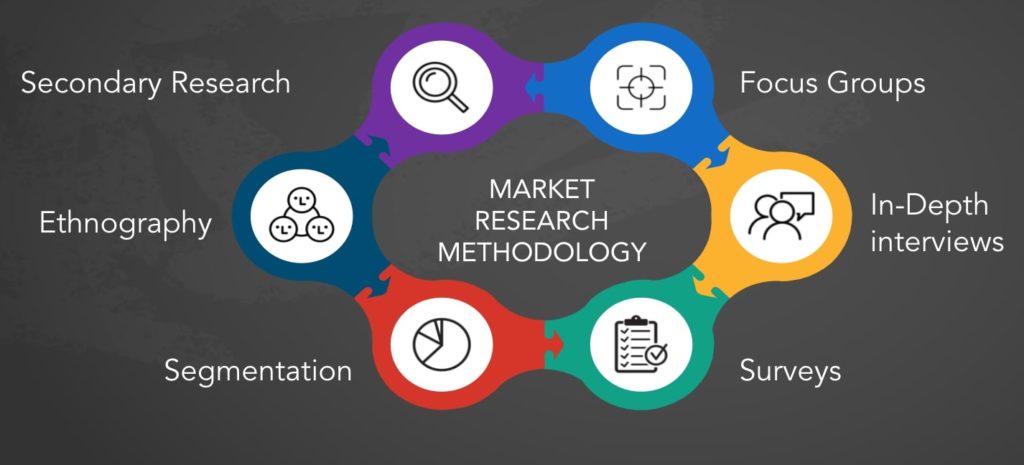
Product managers need to keep up with trends, product management techniques, and new product development strategies.
Product managers should be able to understand the ever-changing customer needs, and think strategically about diversifying or evolving products/services that already exist but are not meeting current market needs.
5. Analytical Skills
Product managers must be able to process and analyze data, product feedback, and user insights. Moreover, product managers must have the ability to interpret statistical models with complex algorithms.
This will enable product managers to make more informed decisions in product development.
The product manager skill set is evolving as companies are using big data analytics for strategy-making which requires product managers to have hard skills to be able to analyze data to make product decisions.
If you’re interested in learning the skills to become a great product manager, then check out our product management certification course.

6. Interpersonal Abilities
Product managers must work with product teams, engineering/programming teams, and other product stakeholders. This requires the product manager to be able to communicate effectively with colleagues by persuading them of any product decisions that have been made.
A product manager is often required to make presentations on behalf of their team, which means they need excellent public speaking skills and the ability to speak in front of groups.
Also, a product manager needs excellent interpersonal skills when it comes to negotiating with stakeholders, making sure they can identify what is important, and make deals without being walked over.
7. Marketing and Sales Abilities
Product managers must be knowledgeable when it comes to marketing and sales. For product managers, this means being able to understand what strategies will work best for their product in the market.
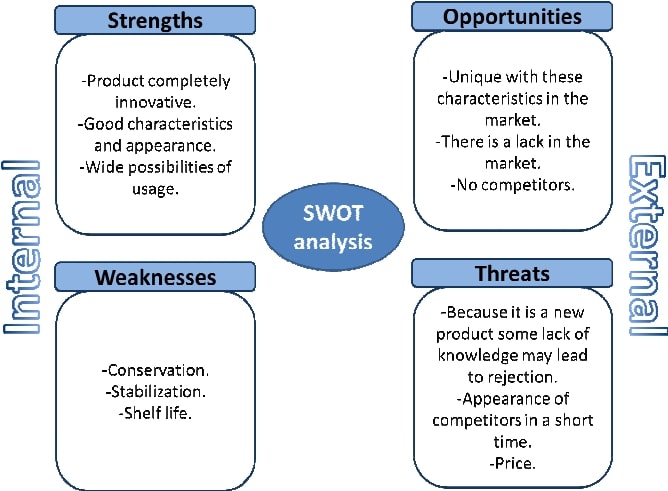
Credits: Research Gate
It also means understanding how they can get a product into the hands of consumers without spending an exorbitant amount on advertising or other external initiatives.
8. Delegation Skills
Product managers need to be able to delegate tasks and responsibilities. This means assigning necessary product management duties as well as what is required of the team members who are reporting back, ensuring that they have everything they require to complete their work thoroughly.
9. Strategic Thinking Skills
Product managers must be able to think about product strategy past what is simply on the product roadmap, and this means using critical thinking and being able to anticipate possible hurdles or problems. This includes thinking of ways around a problem that has been tried before to come up with something new and innovative for their product.
10. Prioritization Skills
Product managers need to be able to prioritize product features, requirements, and tasks in order of importance. This means that product managers must know which product feature will have the most impact on their customers or potential customers.
Other Important PM Skills
The following are some other important skills product managers should have in 2025.
Empathy
I’m a firm believer that you cannot succeed in this field and be a successful product manager if you do not have the capacity to understand the emotions of others around you. As a product manager, you simply deal with too many different stakeholders, and having the empathy to understand everyone’s motives will allow you to cut through the noise, make the right trade-offs, and set a clear vision for your product.
The first major use case for empathy deals with your most important stakeholder: your customer. Keep in mind that your development teams rarely (if ever) get the time to go out and understand your customer base. It is up to you to be the umbrella catch-all for customer feedback.
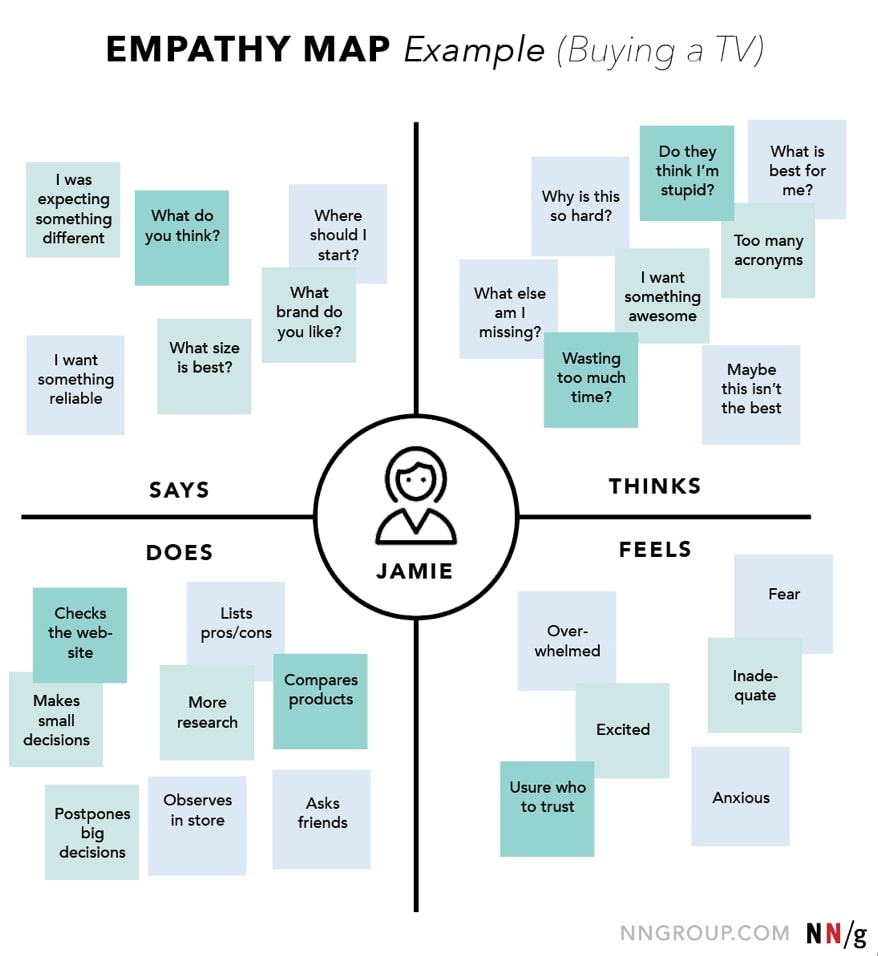
Credits: NNGroup
You will generally be the sole representation of your customers during internal decision-making. You need to develop empathy to understand exactly how your customers are interacting with a new product or your existing product and what they need so that you can effectively guide your team toward developing the right product features.
Your second use case for empathy involves working with cross-functional teams in your organization who are all helping to make your product a success. You’ll quickly find that every single team has its own agenda and motivations for getting particular product features onto the roadmap.
As the product manager, it’ll be up to you to take in everyone’s needs, prioritize accordingly, and arrive at a product decision that everyone deems satisfactory.
For example, your sales team might request an admin tool that will allow non-technical salespeople to easily change product prices and your marketing team might request that you build in a feature for a cross-product rewards program.
Your product marketing team may have done some market research showing that you need to be ready for a product launch in the next month.
Meanwhile, your engineering team is scrambling to complete a feature that has already been delayed for the past 2 weeks.
Having the empathy and interpersonal skills to understand each team’s agenda will allow you to parse through all these requests, prioritize the right features in your product development cycles, and create a product strategy that everyone is aligned with.
OPC (Organization, Prioritization, Communication)
Product management is like a never-ending fire drill with countless tasks to complete every single day.
Good product managers are extremely organized with their project management and time management. The best product managers know how to keep track of their tasks so that nothing falls through the cracks and gets lost in the e-mail twilight zone. You’ll find that all product experts in the PMHQ community would agree.
I like to use a combination of Evernote (to take notes during my daily meetings/scrums) and Google Docs (for schedules/lists/tasks) to keep track of what’s going on.
After a product manager has managed to organize everything, the next step is prioritization. Product managers need to prioritize everything, from their daily tasks to the product roadmap.
Establish a system that works for you: for personal tasks, I use a low, medium, and high-priority system and for the product backlog, I use various criteria like importance, urgency, and cost to prioritize features. This one’s a bit subjective depending on your work style and how agile you like to operate, but as long as you are following the Pareto principle (80-20 rule) and prioritizing your important tasks, you’ll be fine.
Lastly, there’s no use in doing all of the above if you aren’t communicating with the rest of the stakeholders on your product team. Be consistent and clear and remember to exercise empathy when communicating with different parties to ensure that everyone is on the same page.
If you need a system for communication (like weekly 1 on 1 meetings) then get it set up to make sure there are constant feedback loops with the rest of your teams.
As you can see, OPC is a triangle of hard and soft skills that requires all 3 sides to function to remain stable. Having a baseline of these skill sets in place will free your mind to focus on higher-level strategic thinking.
Driving Analysis and Insight
The final skill set great product managers should have is the ability to get their hands dirty with analyzing data. While technical skills like coding aren’t mandatory, the ability to analyze data and provide recommendations/insights for the rest of your team is crucial for measuring success.
For every feature, you push or course of action taken through the life cycle of your product, there should be measurable results that can determine success or impact.
From a quantitative standpoint, this means that you should be getting familiar with Excel and SQL so that you can dig through available data and let your team know how the product life cycle or feature they’ve helped has made an impact.
And if there was no impact, they should be aware of this too so that you can all recalibrate and decide on the next steps.
From a qualitative standpoint, this means spending time with your users and getting insights into how new features have affected their use of your product.
Here are the other soft skills for product managers to build a successful career:
- Rational and logical thinking
- Understanding of product lifecycle
- Familiarity with technical requirements to ensure the development of successful products
Final Remarks
The role of a product manager is both challenging and rewarding, requiring a diverse set of skills to successfully bring a product from concept to market. As we have explored, strategic thinking, market analysis, effective communication, and strong leadership are fundamental to this position.
Additionally, adaptability, empathy, and a customer-centric mindset are crucial in navigating the complexities of product development and market dynamics.
By honing these skills, product managers can not only drive the success of their products but also contribute significantly to their organization’s overall growth and innovation.
The key to thriving in this role lies in a relentless commitment to learning and improvement, ensuring that both the product and the team behind it achieve their highest potential.
FAQs
Here are answers to the questions about product manager skills:
What skills does a product manager need?
A product manager needs strong analytical skills to interpret market data and customer insights.
Project management skills help in planning, prioritizing, and executing product development processes efficiently.
Effective communication skills are crucial for collaborating with cross-functional teams and stakeholders.
What are the top 3 responsibilities of a product manager?
A product manager is responsible for defining the product vision and strategy to align with business goals.
They also gather and prioritize customer feedback and market trends to inform future product enhancements and iterations.
They manage the product development lifecycle, from ideation to launch, ensuring timely delivery and quality.
What are the qualities of a good product manager?
A good product manager exhibits strong leadership to inspire and guide teams toward common goals.
Adaptability and problem-solving skills are essential to navigating challenges and changing market conditions successfully.
They possess empathy to understand and prioritize customer needs effectively.
What is required for a product manager?
A product manager typically requires a blend of technical knowledge and business acumen to bridge the gap between development and market needs.
Strong interpersonal skills and the ability to make data-driven decisions are also critical for success in this role.
Experience in project management and familiarity with agile methodologies are often necessary.
What makes a great PM?
A great PM possesses a strategic vision combined with the ability to execute and deliver results.
Their empathy and customer-centric approach ensure that they create products that not only meet market demands but also delight users.
They excel in communication and collaboration, effectively aligning diverse teams and stakeholders.
What makes you a unique product manager?
A unique product manager holds technical knowledge with a strong understanding of user needs, to create innovative and user-friendly solutions.
They hold communication skills to enable smooth teamwork across different departments.
Additionally, their commitment to ongoing learning helps the product management team stay current with market trends and new technologies.
What type of person is a product manager?
A product manager is typically a strategic thinker who is both detail-oriented and big-picture-focused.
Additionally, they possess a customer-centric mindset, constantly seeking to understand and solve user problems.
They are highly communicative and collaborative, working well with cross-functional teams.
What is a Level 3 product manager?
A Level 3 product manager is a mid-level professional with several years of experience in product management.
Their responsibilities include defining product strategy, managing roadmaps, and mentoring junior product managers.
They typically handle more complex products or projects and may lead small teams.
Interested in strengthening your product manager skills to become a great product manager? You might want to check out our popular Product Manager Certification Course. You’ll learn the fundamentals of product management, how to launch your side project, and how to dominate product manager interviews.