What does a data science product manager do? here’s my take

Our reviewers evaluate writing services independently. Learn how we stay transparent, our methodology, and tell us about anything we missed.
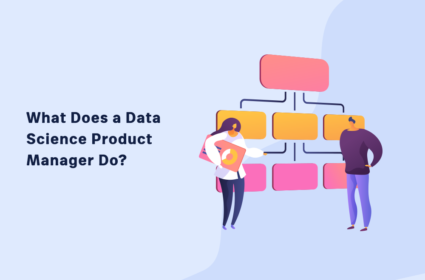
Data science teams can drown in interesting models that never become products. A data science product manager exists to connect that craft to user and business outcomes.
What the role is
A data science PM partners with data scientists, ML engineers, data eng, and product/design to ship data-powered capabilities—recommendations, forecasting tools, decision support, automation, analytics products—not just notebooks.
Titles vary. Sometimes it's "ML PM," "AI PM," or "data product manager" with overlapping scopes. Read the job, not just the label.
What I'd expect you to own
- Problem framing: is this a model problem, a data problem, or a workflow problem?
- Success metrics beyond model accuracy (adoption, decision quality, lift, cost)
- Roadmapping experimentation vs productionization
- Cross-functional sequencing (data contracts, labeling, infra, UX)
- Ethics, privacy, and failure modes (what happens when the model is wrong?)
- Translation between research timelines and product commitments
Roles across the org (typical)
You sit between:
- Data science — methods, experiments, model choices
- Data engineering — pipelines, freshness, reliability
- Product / design — UX for predictions and explanations
- Stakeholders — operators who must trust the output
Your superpower is making tradeoffs explicit: precision vs coverage, speed vs explainability, automation vs human-in-the-loop.
Skills that matter
- Product sense for uncertain, probabilistic features
- Enough stats/ML literacy to smell nonsense
- Experiment design and metric discipline
- Stakeholder management when results are "it depends"
- Ruthless scoping from research curiosity to shippable MVP
SQL helps. So does saying "we shouldn't model this yet."
How to move toward the role
- Ship product work that uses data deeply (even without the title)
- Partner on one model that reached production—document the scars
- Learn evaluation beyond accuracy (calibration, bias, latency, feedback loops)
- Practice writing PRDs for probabilistic UX
- Consider structured learning via data/AI PM paths
My take
Data science PM isn't "PM who likes charts." It's product leadership for systems that guess—and you get paid to make those guesses useful, safe, and adopted.
For a structured path, look at the Data Product Manager Certification (and AI-focused tracks if the role is model-heavy). The newsletter keeps practical notes coming.