

|
Josh FechterJosh Fechter is the co-founder of Product HQ, founder of Technical Writer HQ, and founder and head of product of Squibler. You can connect with him on LinkedIn here. |
Product roadmap tips: How I’d make a roadmap useful

Start with the roadmap job Before choosing a format, I ask who the roadmap is for and what decision it should support. A team view can guide near-term work, an executive view can explain strategic bets, and a customer view may need different language and commitment. I prefer shared intent with audience-appropriate views. Tips I use I organize around outcomes, problems, or strategic themes rather than feature names. I distinguish...
Read moreHow to create software releases: The checklist I’d use
Treat release as product work I think of a software release as a controlled learning and delivery event, not only the moment code reaches production. The process should protect users, help the team respond to surprises, and make expected learning explicit. The right checklist depends on risk. My checklist I confirm the purpose, audience, scope, and out-of-scope items. Then I review risks and readiness: acceptance checks, accessibility, performance, security, data...
Read moreHow to write a scrum manager cover letter: What I’d make concrete
Lead with the team problem I would open a scrum manager cover letter with the delivery or collaboration problem I know how to help solve. A list of ceremonies is weaker than a clear example of how I helped a team make work visible, improve a conversation, or learn from a missed expectation. I would name the context: team shape, product environment, constraints, and the change I was trying to...
Read moreKanban cards: How I’d make work visible and actionable
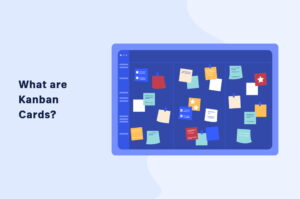
Represent meaningful work I use a Kanban card to represent a piece of work that can move through a shared workflow. The card should make the customer or business need, desired outcome, owner, and important constraints understandable enough for the team to act. I avoid creating cards for every tiny motion. Too much fragmentation makes the board harder to read and hides the work that actually needs a decision. Make...
Read moreTechnical product manager skills: How I’d build the useful mix
Build judgment before collecting tools I think a strong technical product manager combines product judgment with enough technical fluency to make good decisions with engineers. That does not mean becoming the team's most senior developer. It means understanding the customer problem, the system's important constraints, and the trade-offs behind the options. I would start with customer discovery, prioritization, written communication, and decision-making. Those skills keep technical knowledge connected to value...
Read moreAgile vs DevOps: How I’d explain the difference to a product team
Agile and DevOps get mashed into one buzzword smoothie. They're related—and they're not the same. Here's how I'd explain Agile vs DevOps to a product team. Agile, briefly Agile is a way of discovering and delivering product value in small feedback loops: collaboration over heavy process, working software over ceremony, responding to change over following a plan carved in stone. In practice: iterative delivery, close stakeholder contact, frequent inspection, adapting...
Read moreKanplan vs Kanban: How I’d choose
Clarify the planning need I think of Kanban as a flow system: visualize work, limit work in progress, manage flow, and improve using evidence. Kanplan is commonly used for a hybrid approach that combines a backlog with Kanban-style continuous flow. The label matters less than the operating problem the team is trying to solve. I would ask whether the team needs a prioritized queue for upcoming work, a regular planning...
Read moreAgile metrics: Which signals I’d actually use

Start with a question I choose agile metrics to answer a question about the delivery system. I do not start with a dashboard and search for a story. I also keep metrics at the system level where possible, because ranking individuals changes behavior and damages the signal. Signals I would consider Cycle time shows how long work takes once started; lead time includes the wait before it starts. Work in...
Read moreAdvanced roadmaps in Jira: How I’d use the planning view
Use the roadmap to ask a decision question A planning view is useful when it helps me understand a choice. I might use it to explore dependencies across teams, compare delivery scenarios, identify a capacity constraint, or communicate a current direction. I would not use it to create false precision about dates that depend on uncertain work. Before configuring a plan, I would define the scope, audience, time horizon, work...
Read moreHow to write a technical program manager resume: What I’d prove
A TPM resume has to show you can align multiple workstreams, kill blockers early, and land outcomes—not that you sat in status meetings. What I'd emphasize Programs spanning eng + partners, with clear scope and tradeoffs Risks you surfaced before they became incidents Delivery metrics that matter: predictability, dependency burn-down, launch readiness Stakeholder communication that changed a decision, not just “kept people updated” I'd skip bullets that only restate the...
Read moreHow I’d build an agile project-management workflow
Map the work as it is I would build an agile workflow by observing how work really moves from idea to learning, not by starting with a long menu of statuses. I would identify discovery, decision, delivery, review, release, and follow-up states only when they represent a meaningful change. The workflow should help people answer what is happening, what is blocked, and what decision comes next. Add policies and limits...
Read moreGit in an agile workflow: How I’d connect code changes to product learning
Connect changes to outcomes I use Git as part of a feedback system, not just as a place to store code. A change should be small enough to review, connected to a product or technical decision, and easy to integrate or roll back when the risk warrants it. That connection helps the team understand why a change exists without forcing every commit message to carry the entire product strategy. Make...
Read moreHow to use scrum metrics: What I’d track (and ignore)

Scrum metrics help when they spark better conversations. They hurt when they're used as a performance weapon. Here's my take. Metrics I'd actually look at Throughput / delivery rate — are we finishing slices? Cycle time — how long from start to done? Sprint goal success — did we achieve the intent? Escape defects / incidents — quality after release Carryover patterns — chronic overcommitment? Velocity can be a planning...
Read moreBusiness strategy and agile development: How I’d connect them
Translate strategy into choices I do not treat agile development as a strategy by itself. I connect it to a small set of business and customer outcomes, then make clear which choices follow from those outcomes. A strategy should help a team decide what to pursue, what to defer, and what evidence would change direction. I would explain the customer, the problem, the advantage we are trying to create, and...
Read moreGantt charts: How I’d use them alongside agile planning
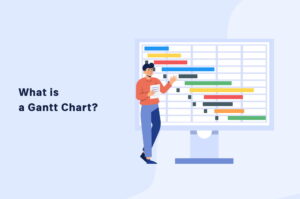
Use a Gantt chart for the question it can answer I use a Gantt chart when sequence, dependencies, milestones, or external commitments need a shared view. It can help show how a migration, launch, or coordinated program fits together. It is less useful when it is treated as a precise prediction for uncertain discovery work. I would label assumptions, confidence, and decision points rather than presenting every bar as a...
Read moreAgile vs Waterfall: How I’d choose for a product team

Agile vs Waterfall debates get tribal fast. I treat them as risk-management styles for different uncertainty profiles. Agile project management (plain English) Work in small increments, validate often, revise the plan. Backlogs beat giant upfront specs when you're still learning what value means. Benefits: faster feedback, adaptability, earlier demos of working slices. Drawbacks: can hide weak strategy; needs discipline and engineering maturity; stakeholders may interpret flexibility as "no commitments ever."...
Read moreHow to write a B2B product manager resume: What I’d emphasize
A B2B PM resume has to prove you can ship through long cycles, messy stakeholders, and revenue-adjacent tradeoffs—not that you ran a consumer A/B test once. What I'd put up top Domain + customer type (SMB, mid-market, enterprise) in the first lines Outcomes tied to adoption, retention, pipeline, or expansion—not vanity launches Evidence you influenced sales, CS, and engineering without owning them Ambiguity you clarified: packaging, pricing experiments, integration bets...
Read moreHow to write a technical program manager cover letter: What I’d connect
Lead with the program problem I do not use a technical program manager cover letter to repeat my resume. I use it to show that I understand the kind of complex change the role must coordinate. I identify the systems, teams, customers, dependencies, and risks in the job description before choosing an example. A credible opening names the problem I helped make manageable and the reason it mattered. I avoid...
Read moreWhat is a Scrum Master? how I’d explain it to a product team

People hear "Scrum Master" and picture a meeting scheduler with a certification. That's not the job when it's done well. Here's how I'd explain a Scrum Master to a product team. The job in one line A Scrum Master helps the team inspect and adapt—removing impediments, coaching Scrum done well, and protecting focus so delivery can be honest. What they're accountable for Facilitating Scrum events that produce decisions, not theater...
Read moreHow to create an incident response plan: The approach I’d take

Incidents aren't only a security team's problem—product orgs need a rehearsed response when customers are hurting. Here's how I'd create a usable plan. Why a plan beats heroics Faster containment when roles are clear Better customer trust via honest comms Less blame, more learning Fewer repeat outages from the same root cause What I'd put in the plan Severity definitions — SEV1–SEV3 with customer impact examples Roles — incident commander,...
Read moreAgile scrum artifacts: How I’d keep them useful

Artifacts should reduce ambiguity I use Scrum artifacts as shared information, not paperwork for an audit. The Product Backlog, Sprint Backlog, and Increment make different parts of product work visible. If an artifact does not help someone understand what matters, what is changing, or what is usable, I simplify it. Product Backlog I keep the top of the backlog clear enough for near-term decisions while allowing lower items to remain...
Read moreCustomer experience: How I would improve the whole product journey

See the journey, not one touchpoint I think of customer experience as the customer’s end-to-end relationship with a product or company: discovering it, deciding whether to try it, getting started, using it, getting help, renewing, expanding, or leaving. I would map that journey before choosing an isolated interface change or a single satisfaction number. For each stage, I would ask what the customer is trying to accomplish, what they need...
Read moreGoogle associate product manager: How I’d think about the program

Google’s Associate Product Manager (APM) program is one of the most visible on-ramps into product management. I’d treat it as a high-signal apprenticeship with a hard interview bar—not a lottery ticket, and not the only credible path into the craft. I’ve talked with candidates who treat APM like the only door that matters, and with strong PMs who never went near a rotational program. Both patterns can work. What doesn’t...
Read moreBusiness analyst to product manager: How I’d make the jump
Business analysts already live near requirements, stakeholders, and process. That's why BA → PM is a common jump—and why some BAs get stuck translating docs forever without owning outcomes. Here's how I'd make the transition. What changes when you become a PM BA-leaning PM-leaning Document requirements Decide what not to build Clarify process Own problem framing and success metrics Serve stakeholder requests Prioritize against strategy and capacity Analyze the business...
Read moreHow to conduct product releases: The checklist I’d use
A release isn't a date—it's a risk-managed change to what customers experience. I'd optimize for boredom: no drama, clear rollback, honest comms. Checklist I'd run Done means tested, documented, support-ready—not only coded Rollout plan: % gates, feature flags, kill switch Comms: customers, sales, CS, status page if needed Metrics watchlist for the first 24–72 hours Retro: what almost burned us Release shapes Shape When Silent / flagged High uncertainty Staged...
Read moreWhat does an AI product manager do? my practical take
When people ask me what an AI product manager does, I start here: you're still a product manager—discovery, prioritization, delivery, outcomes—but your "product" includes models, data, evals, and failure modes that classic feature work doesn't. Data scientists and engineers build the engines. An AI PM makes sure those engines solve a real customer problem in a way the business can ship, monitor, and improve responsibly. The title is newer. The...
Read moreAgile project management: How I’d keep the focus on outcomes

Start with the outcome I approach agile project management by defining the customer or business outcome before choosing the plan. The team needs to know what change matters, who is affected, how we will learn, and which constraints cannot be ignored. That context makes adaptation useful instead of making every change feel like a failure of planning. Plan in layers I would keep a near-term plan detailed enough to act...
Read moreWhat does a SaaS product manager do? my take
SaaS product management is "regular" product management with a few laws of physics you can't ignore: recurring revenue, retention, expansion, and the cost of serving customers over time. If you only optimize new logos and ignore churn mechanics, the spreadsheet eventually yells. Here's how I explain what a SaaS PM does. What a SaaS product manager does You own (or co-own) outcomes for a software product sold as a subscription—B2B,...
Read moreProduct manager analytics: The metrics I’d actually watch
Analytics won't save a bad product sense—but without numbers, you're guessing in public. Here's the metric set I'd teach a new PM, and how I'd use it. Metrics I keep on a short list Acquisition / qualification Product-qualified leads (PQLs): users who hit meaningful product behaviors, not just marketing form fills Cost per acquisition (CPA): useful with channel context; dangerous as a vanity north star alone Activation & value Time-to-value...
Read moreAn agile mindset: How I’d turn principles into habits

Make learning part of the work I think an agile mindset begins with accepting that the first plan is a hypothesis. I can still plan carefully, but I stay willing to change the plan when customer evidence, technical learning, or new risk changes the decision. That is not an excuse for indecision. It is a commitment to make assumptions visible and test the ones that matter. Turn principles into habits...
Read moreWhat does a machine learning product manager do? my take

An ML product manager is still a product manager. The twist: your product's behavior is probabilistic, data-hungry, and expensive to get wrong—so discovery and evaluation get stricter. What the role is You own outcomes for products that use machine learning as a core capability (recommendations, ranking, forecasting, assistants, anomaly detection, etc.). You translate messy user/business problems into problems a modeling team can attack—and you refuse ML when a heuristic would...
Read moreWhat an agile product owner does: My practical take
An Agile product owner isn't "the person who writes tickets." I'd describe the job as maximizing outcomes from a team's limited capacity. What I'd own day to day Ordered backlog tied to goals—not a dumping ground Clear acceptance criteria and definitions of done Stakeholder negotiation when requests collide Availability to the team for clarifying questions Feedback loops from users and data after release Ceremonies I'd care about (for substance) Event...
Read moreWhat does a finance product manager do? my practical take
Finance products don't get to "move fast and break things." Money broken once is trust broken for a long time. Here's my take on what a finance product manager does. The job in one line You ship financial workflows that are useful and trustworthy—under regulatory, risk, and operational constraints most consumer apps never face. Domains you might land in Payments, banking, lending, investing, insurance, billing/finops B2B finance tools (AP/AR, expense,...
Read moreStories, epics, and initiatives: How I’d use the levels
Use each level for a different conversation I use an initiative to describe a meaningful strategic outcome or investment area, an epic to group a substantial product capability or problem, and a user story to express a small slice of value or learning. The exact labels vary by organization, so I define the terms locally before building a hierarchy. The levels should help people move between conversations. Leaders may discuss...
Read moreCode reviews: How I’d make them improve product quality
Review the change, not the person I use code review to improve a change before it reaches users and to share understanding across the team. It is not a ceremony for proving who knows the most or a substitute for testing, design discussion, or good architecture. I would make the purpose and risk of the change clear in the pull request. The description should explain what changed, why, how it...
Read moreHow to write a B2B product manager cover letter: The story I’d choose
Show that I understand the B2B customer I would not write a B2B product manager cover letter as a generic PM introduction. In B2B products, the user, buyer, administrator, approver, and economic decision-maker may be different people. I choose an example that shows how I navigated those perspectives without assuming they wanted the same thing. I start by connecting the role to a customer workflow and a product problem. That...
Read moreJira rules that create subtasks: How I’d automate without hidden work
Automate a stable pattern I would create a Jira rule that generates subtasks only when the parent issue has a repeatable need. If every feature needs a security check, documentation review, or launch-readiness task, automation can reduce forgetting. If the work varies widely, a rule may create noise faster than it saves time. Before configuring anything, I would write the intended trigger, conditions, actions, owner, and exception path. The rule...
Read moreProject management vs program management: How I’d draw the line
The distinction I use I think of project management as coordinating a defined piece of work with clear boundaries, timing, and deliverables. Program management coordinates related projects or workstreams so they create a coherent larger outcome. Titles vary, so I focus on decisions and scope. Project management A project manager clarifies scope, milestones, owners, risks, dependencies, communication, and acceptance criteria. Good project management makes change visible instead of allowing scope...
Read more13 Most Hilarious Product Manager Jokes
Product management can get very boring at times, especially if your product isn’t something that you’re personally invested in. At times, even a product manager’s job needs to be toned down using product manager jokes. You might go for them in your professional setting or need them for your opening speech at an event. Regardless of the occasion, you have to make sure that you have some good material to...
Read moreTechnical product manager skills: What I’d actually prioritize

“Technical PM” doesn’t mean you merge code on Fridays. It means you can hold a credible conversation about systems, tradeoffs, and constraints—and still do the product job: problems, priorities, outcomes. In 2026, the title shows up on everything from API platforms to AI features to internal developer tools. The skill bar isn’t “pass a coding interview for sport.” It’s whether engineers trust your judgment when the easy product story collides...
Read moreSalesforce product manager: How I’d describe the role

"Salesforce product manager" can mean PM at Salesforce or PM on Salesforce-heavy products. I'd clarify which in the first conversation—and then talk ecosystem reality. What I'd expect either way Comfort with platform constraints and admin/developer personas Roadmaps that respect enterprise change management Partnership with solution engineers, architects, and implementation partners Metrics beyond vanity: adoption of capabilities, time-to-value, retention Honesty about technical debt in org-wide configurations Skills I'd prioritize Skill Why...
Read more5 Best Product Manager Conference in 2026

Product management in the software product development space has recently started gaining traction as a bona fide position. That has given birth to the concept of a product manager conference. A lot of the credit for this goes to similar events that are building new product leadership and inspiring innovation in the product world, eventually creating the idea of a product manager conference. In this article, we’ll look at the...
Read moreWhat does a data science product manager do? here’s my take

Data science teams can drown in interesting models that never become products. A data science product manager exists to connect that craft to user and business outcomes. What the role is A data science PM partners with data scientists, ML engineers, data eng, and product/design to ship data-powered capabilities—recommendations, forecasting tools, decision support, automation, analytics products—not just notebooks. Titles vary. Sometimes it's "ML PM," "AI PM," or "data product manager"...
Read moreTechnical product manager vs scrum manager: How I’d separate the work
Start with the primary question I separate these roles by asking what decision or outcome each one primarily supports. A technical product manager usually helps decide what technical or platform problem is worth solving and why. A scrum manager usually helps the team improve how it collaborates, plans, inspects, and adapts. There is overlap, especially in organizations with flexible titles. The title alone cannot tell me the real accountability. Compare...
Read moreProduct manager education requirements: What I’d actually look for

There's no single degree that makes you a PM. When I evaluate education requirements—for myself or a hire—I separate credentials from capability. What usually matters more than the diploma Evidence you can discover problems and ship outcomes Communication that survives exec and eng scrutiny Comfort with data enough to make decisions (not become an analyst) Domain context when the product is specialized When formal education helps Situation Education can help...
Read moreWhat does a startup product manager do? My take
Startup PM isn’t “enterprise PM but with beanbags.” The constraints are the job. Here’s my practical take on what a startup product manager does—and how I’d hire (or become) one in 2026. The job in one line You find product-market signal fast enough that the company still has runway—and you turn that signal into a shippable, learnable product loop. What changes at a startup Ambiguity is default — nobody hands...
Read moreHow to write a scrum manager resume: What I’d show
I'd write a scrum manager resume as proof you improve how work flows—not that you ran standups on time. Signals that matter to me Teams that got more predictable without gaming velocity Impediments you removed with names and results Coaching moments that changed backlog quality or collaboration Honest metrics: cycle time, escaped defects, focus time—not vanity story points Bullets I'd rewrite Weak Stronger Facilitated ceremonies Cut meeting load 30% while...
Read moreJira vs Confluence: How I’d use each tool

Give each tool a clear job I use Jira to track work and decisions that need a visible workflow: issues, ownership, status, dependencies, and delivery signals. I use Confluence for durable context such as product principles, research synthesis, meeting decisions, operating agreements, and guides. The exact setup can vary. The important question is whether people know where to find the truth they need. Connect, do not duplicate I would link...
Read moreHow to conduct agile sprint reviews: What I’d optimize for
Sprint review isn't a performance—it's a feedback and steering loop. I'd optimize for working software and honest stakeholder input, not polished slide decks. Agenda I'd run Remind the sprint goal in one sentence Demo only what meets the done bar (or label explicitly what's partial) Collect feedback mapped to backlog implications Call out risks and next bets—not a second planning session End with decisions or clearly parked questions and owners...
Read moreDevelopment managers vs scrum managers: How I’d draw the line

I would define the local titles first Organizations use “development manager” and “scrum manager” differently, so I would not compare the titles in isolation. I would ask what each person is accountable for, who they support, and which decisions they can make. A development manager commonly focuses on engineering people leadership, technical team health, staffing, performance, and sometimes delivery. A scrum manager—often called a Scrum Master—typically helps a team inspect...
Read moreTechnical product manager vs program manager: How I’d draw the line
I’d keep the distinction simple: a technical product manager owns what to build and why in a technical domain; a program manager owns how interdependent work lands across teams. When companies blur the titles, both hiring and delivery get messy. Here’s how I’d draw the line, where the overlap is real, and how I’d choose a seat. Side-by-side Technical PM Program manager North star Product value + technical tradeoffs Delivery...
Read moreScrum of Scrums: How I’d coordinate teams without status theater
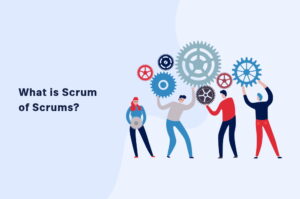
Start with the coordination problem I would use a Scrum of Scrums when multiple teams share an outcome and their dependencies cannot be handled effectively inside each team’s normal conversations. The goal is not to make every team report to a larger meeting. The goal is to resolve coordination problems that cross team boundaries. Before adding the meeting, I would map the dependency, decision, or risk that requires a cross-team...
Read moreScrum: How I’d use the framework for complex work
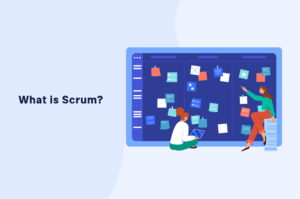
Use Scrum for complex work I use Scrum when a team is solving a complex problem and needs a frequent loop for making work visible, inspecting an increment, and adapting the plan. Scrum is not a complete product strategy or a guarantee of speed—it sits under the broader Agile methodology mindset. It is a framework that creates useful accountabilities and feedback points. I would begin with a product goal and...
Read moreHow I’d learn Scrum using Jira without just clicking buttons
Learn the loop before the tool I would learn Scrum by practicing its feedback loop: set a product direction, order a backlog, create a usable increment, inspect it with stakeholders, and improve the way the team works. Jira can make that work visible, but clicking through a template does not create Scrum by itself. I would start a safe practice project with a clear product goal and a small set...
Read moreAgile ceremonies: What I’d keep, change, or drop

A ceremony needs a job I use “agile ceremonies” as shorthand for recurring conversations that help a team plan, coordinate, inspect results, and improve. The meeting is not the outcome. If a ceremony cannot say what decision or learning it produces, I question the format. The conversations I would keep useful Planning should create a shared goal, realistic work view, and clarity about risks. A daily conversation should focus on...
Read moreProduct experts: How I would build a useful learning list
Define expertise by useful practice I would be careful with any list of “best” product experts. A visible profile, a large audience, or a polished framework does not automatically show that someone’s advice fits my context. I look for people who explain customer problems, decisions, trade-offs, evidence, and what they learned when an approach did not work. I would also check whether the person’s experience matches the kind of work...
Read moreHow I would learn from Rosetta Stone’s scaled agile example
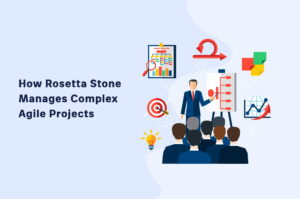
Start with the coordination problem I read the Rosetta Stone example as a lesson in coordination across many agile teams and locations. The useful question is not whether another organization used a particular process. It is what information, decisions, and dependencies had to move between teams so people could build a coherent language-learning product. I would begin by making the product goal and the important constraints visible. Teams need enough...
Read moreHow to build agile teams: The approach I’d take

I'd build agile teams around outcomes and flow, not around a matching set of sticky-note rituals. Structural choices I'd weigh Shape When I'd use it Generalists Small surface area; need end-to-end ownership Specialists Deep domains with clear interfaces Hybrid Most real products—specialists + glue people Habits that matter more than labels Stable team membership long enough to learn Clear product goal per sprint/increment WIP limits so work finishes Definition of...
Read moreManaging remote teams: How I’d design for clarity and trust
Make context easy to find I manage a remote team by making the work more understandable, not by trying to recreate an office online. I would write down the product goal, current priorities, decision rights, working agreements, and the places where important information lives. I would make expectations explicit without confusing visibility with surveillance. People should know what outcome they own, how to raise a risk, when collaboration is required,...
Read moreImprovement Kata: How I’d turn continuous improvement into a routine
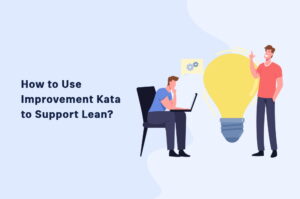
Choose a target condition I use Improvement Kata as a routine for learning toward a meaningful target condition. I would first describe the outcome I want to move toward and the current condition as honestly as possible. “Improve quality” is too vague; a useful target explains what better looks like in the product or process. I would avoid pretending that the full path is known. The value of the routine...
Read moreWhat does a lead product manager do? my take

"Lead Product Manager" sits in the messy middle between senior IC and people manager—and companies use it inconsistently. Here's how I make sense of the lead product manager role. The job in one line A Lead PM owns a meaningful product area and raises the bar for other PMs touching that area—sometimes with formal reports, sometimes without. Common shapes of the role Lead of a multi-squad area — one product...
Read moreLong-term agile planning: How I’d plan without pretending to predict
Long-term does not mean detailed Agile planning still needs a view beyond the next sprint or release. I use long-term planning to align on direction, sequence important learning, and make constraints visible. The farther out the horizon, the less detail I claim. The model I use I start with customer or business outcomes, then use horizons: near-term work can be specific, while later work stays at themes, problems, or capabilities....
Read moreWhat does an ecommerce product manager do? here’s my take

Ecommerce PM looks like "just a website" until one broken checkout step costs a weekend of revenue. Here's how I think about what an ecommerce product manager owns. The job in one line You improve the path from discovery → purchase → repeat purchase—across merchandising, experience, and the operational systems that make orders real. Surfaces you often own Browse / search / PDP (product detail pages) Cart, checkout, payments, and...
Read moreWhat is product-led growth? how I’d explain PLG to a product team

Product-led growth gets tossed around like a religion. I've seen teams slap a freemium toggle on a sales-led product and call it PLG. That's not the game. Here's how I explain product-led growth when a product team asks whether they should chase it. What PLG actually is Product-led growth is a go-to-market motion where the product is the primary driver of acquisition, activation, conversion, and expansion—not a human sales cycle...
Read moreHow to write a group product manager resume: My bar
A GPM resume should read like portfolio leadership: multiple products, managers or senior ICs you developed, and tradeoffs across a line of business—not a bigger IC feature list. What I'd put first Scope: products, revenue/usage band, team size (honest ranges) Org outcomes: hiring, leveling, roadmap alignment across squads Business outcomes: expansion, retention, margin, strategic bets that landed Cross-functional influence with sales, marketing, and eng leadership What I'd cut Feature laundry...
Read moreWhat does a data product manager do? here’s my take
Data product managers look like other PMs until you zoom in. Their "product" is often data itself—datasets, pipelines, metrics layers, experimentation platforms, or analytics experiences other teams consume. I've seen the title stretch from "owns recommendations data contracts" to "make self-serve analytics trustworthy." Same words on LinkedIn; very different weeks. Main responsibilities (how I cluster them) Create new data products Treat a metrics mart, customer profile API, or insights product...
Read moreHow to use the customer interview pyramid: My take
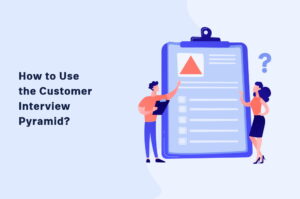
The customer interview pyramid is a reminder: don't open with "Would you use this feature?" I'd start wide and only narrow when I've earned it. How I'd climb the pyramid Context: role, workflow, constraints, and what "good" looks like in their world Problems: pain frequency, workarounds, and the cost of the status quo Solutions (last): reactions to concepts—only after problem clarity If I jump to pitch mode early, I contaminate...
Read moreStand-ups for agile teams: How I’d keep them useful
Give the stand-up a real job I think a daily stand-up matters only when it helps the team coordinate toward a near-term outcome. I would not ask people to recite yesterday, today, and blockers to a manager. I would use the board and the Sprint Goal to discuss what needs attention now. The conversation should help the team notice work that is stuck, a dependency that changed, or a plan...
Read moreThink big and work small: How I’d connect ambition to small bets
Hold the ambition and the next step together I use “think big and work small” to connect a meaningful product direction with a sequence of affordable learning steps. Thinking big gives the team a reason to care and a way to make trade-offs. Working small keeps an assumption from turning into a large irreversible commitment. I would describe the outcome I want, the customer problem behind it, and the evidence...
Read moreWhat is Large-Scale Scrum (LeSS)? my plain-English take

When multiple teams ship one product, single-team Scrum starts to creak. Large-Scale Scrum (LeSS) is one answer: keep Scrum's bones, scale the coordination without inventing a bureaucracy theme park. What LeSS is LeSS applies Scrum principles across multiple teams working on one product, with one Product Owner (in Basic LeSS), one Product Backlog, and synchronized delivery toward a shippable increment. It leans on lean thinking and systems thinking: descaling process,...
Read moreAgile epics: How I’d use them without hiding uncertainty

Give the epic a meaningful outcome I use an agile epic to frame a substantial outcome or problem that is too large for one small delivery slice. I would name the customer or business change we are trying to create, the evidence we need, and the boundaries that keep the work understandable. An epic should not be a hiding place for an entire department’s backlog. If its scope cannot be...
Read moreScrum roles vs job titles: How I’d clarify the difference
Treat roles as accountabilities I use “role” to mean an accountability in a product-development system, while a job title describes how an organization names a position. The two can overlap, but they are not interchangeable. A person with a product manager title may take on several team accountabilities, and a scrum role may be shared or supported without appearing in anyone's title. That distinction helps me avoid arguing from labels....
Read moreUI and UX: How I’d keep the distinction useful

Keep the distinction useful I use user interface, or UI, to describe the controls and visual surfaces people interact with: layout, typography, navigation, buttons, states, and feedback. I use user experience, or UX, more broadly for how the product helps someone accomplish a goal across the journey, including expectations, usability, content, performance, accessibility, and recovery when something goes wrong. The distinction helps me ask a better question, but I would...
Read moreKanban boards: How I’d design one around flow

Model the real flow of work I design a Kanban board around how work actually moves from an idea or request to a usable outcome. I would observe the current states, handoffs, queues, and blocked points before choosing columns. A generic “to do, doing, done” board may be familiar but can hide the decisions the team needs to improve. I would define what each state means and what evidence allows...
Read moreScrum@Scale: How I’d evaluate scaling without cargo culting

Diagnose before scaling I would not adopt Scrum@Scale because a framework promises to solve organizational complexity. I would first identify the problem: conflicting priorities, dependencies across teams, slow decisions, inconsistent quality, or feedback that arrives too late. If one team cannot produce a coherent increment or make decisions clearly, adding a scaling structure will usually amplify the confusion. I would improve the local system before connecting it to a larger...
Read moreTechnical program manager vs product manager: How I’d draw the line
Separate direction from coordination I compare these roles by asking who owns the product decision and who owns the coordination system needed to deliver complex work. A product manager focuses on customer problems, outcomes, product direction, and prioritization. A technical program manager focuses on cross-team execution, dependencies, risks, and the operating rhythm that keeps a large effort moving. Both roles need judgment. Neither is merely administrative. Look at the decisions...
Read moreWhat is the Agile Spotify model? lessons I’d actually take
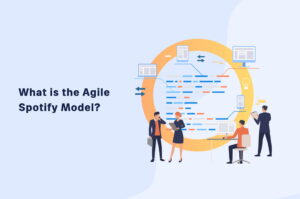
The "Spotify model" is a popularized org pattern: autonomous squads aligned in tribes, with chapters/guilds for skill communities. Useful ideas. Dangerous as a copy-paste reorg. Key components (the vocabulary) Squads: small cross-functional teams owning a mission end-to-end Tribes: collections of squads in a related domain Chapters: competence groups (e.g., backend chapter) across squads—home for craft standards and coaching Guilds: voluntary communities of interest across the company Trios / alliances: pairing...
Read moreData science product development: How I’d make it a product

Start with the decision, not the model I treat a data science product as a product that helps someone make a decision or complete a workflow using data, analytics, or a model. I start by understanding the user, the decision, the cost of being wrong, and what people do today. A technically impressive model is not automatically a useful product. The experience may also need explanations, controls, human review, fallback...
Read moreCustomer research tips I actually use as a PM
Interviews are one input to qualitative research for product managers; I pair the stories with a clear plan for observation, synthesis, and follow-up. When I need broader directional evidence, survey design for product managers helps me ask fewer, more decision-relevant questions instead of collecting noise. Customer research isn't a phase you finish before building forever. It's how you stay honest. Here are the tips I'd keep on a sticky note....
Read moreHow to scale agile in large organizations: The approach I’d take

Scaling Agile fails when companies buy a framework and install ceremonies on a waterfall org chart. Here's how I'd approach it. Principles before branding Small batches of value with feedback Clear ownership for outcomes, not just outputs Dependencies made visible (and reduced) Leadership habits that match the talk—funding, staffing, decision speed SAFe, LeSS, Spotify-inspired models… tools, not religions. I'd pick mechanisms that fit constraints, then inspect and adapt quarterly. What...
Read moreWhat a technical product owner does: How I’d describe the role
"Technical product owner" means different things at different companies. Here's how I'd explain it without the buzzword fog. What I'd expect the job to own Backlog clarity for technically deep surfaces (APIs, platform, data pipelines, infra-adjacent product) Acceptance criteria engineers respect Tradeoff conversations about feasibility, risk, and sequencing Translation between stakeholder goals and system constraints How it differs (in practice) Role Center of gravity Classic Scrum PO Value maximization +...
Read moreWhat a senior technical product manager does: My take
A senior technical PM isn't “a PM who codes.” I'd define the job as owning ambiguous technical product problems end-to-end—with credibility next to senior eng. What I'd expect at senior You set direction when the architecture and the market both argue You sequence platforms, APIs, and migrations without theater You mentor other PMs on technical discovery You communicate risk in language execs and eng both trust Day-to-day texture Mode Examples...
Read moreSprint planning: How I’d make the meeting earn its time

The purpose of sprint planning I want sprint planning to answer why the sprint is valuable, what the team can realistically accomplish, and how it will approach the work. It is not for filling every available hour or assigning tasks to individuals. How I would prepare I make likely priorities, the customer problem, constraints, and open decisions visible before the meeting. The team should have time to ask questions. I...
Read moreProject management software: How I’d pick a stack

“Best project management software” lists age badly—especially when they freeze prices, feature matrices, and AI add-ons that change every quarter. Here’s how I’d actually choose project management software in 2026 for a product or delivery team. I’ve watched companies buy a tool because a board deck needed a vendor name, then spend a year fighting adoption. I’ve also seen a scrappy team out-execute a bigger rival because everyone updated the...
Read moreThe iron triangle: How I’d make scope, time, and cost trade-offs explicit

Use the triangle to expose trade-offs I use the iron triangle—scope, time, and cost—to make constraints explicit. In an agile setting, the model is not a reason to freeze a plan. It is a way to discuss which variable can move when reality changes. I would clarify the outcome first. “Ship the whole roadmap by the date” is not an outcome that helps a team choose. I would separate the...
Read moreHow to manage an agile portfolio: The operating system I’d use

Agile portfolio management fails when every initiative is "P0." I'd run a portfolio like a constrained investment book tied to capacity, not ambition slides. Operating pieces I'd want A small set of themes tied to measurable outcomes Explicit WIP limits across initiatives, not only stories Cadence for intake, kill/continue, and capacity reality Visibility of dependencies without a 40-tab RAID shrine Funding language that can say "not now" without drama Conversations...
Read moreEpics in Jira: How I’d connect large outcomes to shippable work
Create an epic around a goal I would create a Jira epic only after I can explain the outcome or problem it represents. The name should help the team recognize the work, and the description should capture the context, success signal, assumptions, and boundaries. A vague epic creates a vague collection of issues. I would check whether the work really belongs together. If two groups of tickets serve different outcomes,...
Read moreHow to use Jira and Confluence for sprint planning: My working setup
Jira and Confluence can enable sprint planning—or drown it in pages nobody reads. Here's the Jira + Confluence setup I'd actually use. Division of labor Jira — work items, status, sprint contents, flow metrics Confluence — context: goals, decisions, notes, "why this sprint" If everything lives in Jira comments, context dies. If everything lives in Confluence, execution drifts. Before planning (definition of ready-ish) In Jira, candidate issues should have: Clear...
Read moreThe Agile Manifesto: How I’d apply its values without slogans
Use the values as a decision lens I read the Agile Manifesto as a set of preferences for working in uncertain product environments, not as permission to ignore planning, tools, documentation, or contracts. The values help me ask what will create better outcomes in this context. Individuals and interactions matter more than processes and tools when a process is blocking understanding. Working software matters more than comprehensive documentation when the...
Read moreWhat a Facebook product manager does: How I’d explain it
I'd describe Meta/Facebook PMs as people who can find the problem, ship iteratively, and measure honestly in high-scale consumer systems—exact loops evolve, so I wouldn't memorize a frozen interview script as eternal truth. Themes that usually matter Product sense: define users, goals, and a sharp use case Execution: metrics, tradeoffs, root-cause thinking Leadership: clarity, ownership, collaboration under ambiguity How I'd prepare (timeless parts) Focus Practice Product sense Structure answers; don't...
Read moreRelease-ready teams: How I’d make release responsibility continuous
Treat release readiness as continuous I think a release-ready team can move a valuable change to customers with an appropriate level of confidence and support. Readiness is not a final meeting or a person signing a checklist. It is the result of product, engineering, design, quality, security, support, and operations considering the real customer experience. I would make release conditions visible early: what must be true for the user, what...
Read moreWhat does a technical product manager do? my take
Technical product manager means three different jobs depending on the company. My working definition for this hub: A TPM (product sense—not always the program-manager "TPM") owns products where the users, constraints, or value prop are deeply technical—APIs, platforms, developer tools, infra-adjacent surfaces, data pipelines, security products, and similar. You're still doing product management. You just can't fake the technical conversations. What is a technical product manager? A technical PM pairs...
Read moreScrum sprints: How I’d plan, inspect, and adapt
Start with a valuable Sprint Goal I would execute a Scrum sprint by choosing a Sprint Goal that explains why this cycle matters. The goal gives the team a way to make trade-offs when the plan changes. A list of unrelated tickets may be complete and still fail to create a coherent increment. During Sprint Planning, I would discuss the goal, inspect the ordered backlog, and create a plan based...
Read moreWhat does a product owner do? my practical take

People still argue about product owner vs product manager like it's a personality test. My take is calmer: product owner is the Scrum/Agile accountability for maximizing product value—usually through backlog ownership and day-to-day clarification with the team. Product manager is a broader industry job family that may or may not map 1:1 to that accountability. In some companies, one person is both. In others, PO is delivery-facing and PM leans...
Read moreProduct management: How I’d connect customer problems to outcomes

Start with the customer problem I explain product management as the practice of deciding which customer or user problems are worth solving, how to solve them responsibly, and whether the result creates meaningful value. It sits at the intersection of customer understanding, business context, technology, design, and delivery. I would begin with discovery rather than a feature list. I want to understand the people affected, the job they are trying...
Read moreJira for project management: How I’d create visibility without bureaucracy
Jira is fine project software and a terrible religion. I use it when I need shared ownership, dependency visibility, and a durable record of decisions—not when the team needs a status theater machine. Here’s how I’d approach Jira for project management as a PM who still wants humans to talk. When Jira helps (and when it hurts) Situation I’d lean on Jira I’d keep it light / elsewhere Multi-team delivery...
Read moreBest data analyst certifications: How I’d compare them

There are endless data analyst certifications. Most comparison posts freeze prices and age badly. Here's how I'd compare options—and which paths I'd consider depending on your goal. What I'd optimize for Skill proof — SQL, wrangling, visualization, basic stats, stakeholder communication Portfolio artifacts — can you show analysis, not just a badge? Fit to role — analyst vs analytics engineer vs data-minded PM Credibility for your target employers — vendor...
Read moreData analytics boot camps: How I’d evaluate if one’s worth it

Boot camps promise career velocity. Some deliver; some sell vibes. Here's how I'd evaluate a data analytics boot camp before committing. When a boot camp can be worth it You need structure and deadlines more than another YouTube playlist You want a curated project sequence and feedback You're switching fields and need a story + network You can protect the hours (part-time fantasy schedules fail hard) If you're already strong...
Read moreHow to manage a remote team with distributed scrum: What I’d do

Distributed Scrum fails when you copy office ceremonies onto Zoom and call it culture. I'd redesign for async-first clarity and scarce overlap hours. Practices I'd insist on Written sprint goals and acceptance criteria before the planning call Overlap hours protected for decisions—not status karaoke Recorded demos and decision logs for zones that sleep through live Explicit working agreements on response times and what counts as urgent A single source of...
Read moreBurndown charts in Jira: How I’d read remaining work honestly
Decide what the chart should help me see I use a Jira burndown chart to discuss remaining work during a sprint or larger effort. Before creating one, I would agree on the estimation approach, the scope boundary, and what “done” means. A chart cannot produce a meaningful signal when the underlying work is inconsistent. I would choose the board and sprint, confirm that issues have the relevant estimates, and make...
Read moreTechnical program manager vs scrum manager: How I’d explain the difference
Start with scope I distinguish a technical program manager from a scrum manager by looking at the scope of coordination. A technical program manager typically helps multiple teams or functions deliver a complex outcome, often by managing dependencies, risks, milestones, and decisions. A scrum manager usually focuses on team-level collaboration, flow, inspection, and adaptation. The exact boundary depends on the organization, so I would verify the actual work instead of...
Read moreHow to write a group product manager cover letter: The leadership story I’d choose
Lead with portfolio-level judgment I would write a group product manager cover letter around a leadership problem, not a collection of adjectives. The reader should see how I set direction across a portfolio, made trade-offs between products, and helped teams connect daily decisions to a shared outcome. I would name the context and the constraint. A story about competing priorities, unclear ownership, or a strategy that needed to become executable...
Read moreAdvanced Scrum in Jira: How I’d support habits instead of ceremony
Start with the Scrum problem, not the feature list I would use Jira’s advanced Scrum capabilities when the team has a real need for clearer backlog management, sprint planning, reporting, or cross-team visibility. I would not add settings simply because they exist. Every configuration should support an agreed product or delivery conversation. I would first make the product goal, backlog ordering, workflow policies, and definition of done understandable without Jira....
Read moreWhat a Microsoft product manager does: How I’d describe the role
At Microsoft scale, I'd describe the PM job as clarity amid ecosystem complexity: many customer segments, long enterprise cycles, and deep platform constraints. Work I'd expect Problem framing for customers who buy differently than consumers Roadmaps negotiated across engineering, marketing, and field Spec quality that survives handoffs Metrics tied to adoption and customer success reality Skills that travel Skill Why it shows up Stakeholder mapping Large matrix orgs Technical literacy...
Read moreHow to practice lean portfolio management: What I’d run

Lean portfolio management, for me, means treating initiatives like a managed WIP system—not an annual project shopping list. Operating system I'd use Themes tied to strategy (few, memorable) Capacity envelopes so everything isn't “P0” Guardrails: compliance, architecture, cost-to-serve Cadence to start, stop, and double-down on bets Practices that keep it honest Practice Why Portfolio Kanban See idle money and blocked value Kill criteria Stop funding zombies Outcome metrics Avoid output...
Read moreData analyst training: How I’d choose a path

If you're evaluating data analyst training, I'd optimize for practiced skill and portfolio proof—not certificate collecting. Pricing and cohorts change; verify on the provider's site. Who training helps Career switchers into analytics PMs who need sharper metrics instincts Marketers/ops folks leveling into data roles Folks considering a later move into data product management How I'd evaluate a program Tooling practice — SQL, spreadsheets, a BI tool, basic stats Real datasets...
Read moreHow to reduce technical debt: The approach I’d take
Technical debt isn't a moral failing—it's a portfolio problem. I'd manage it like risk and capacity, not a guilt trip in retro. How I'd reduce it without freezing the roadmap Make debt visible: inventory with owners, impact, and trigger conditions Tie paydown to product outcomes (faster delivery, fewer incidents, safer changes) Budget a steady tax (e.g., a slice of each sprint) plus occasional focused campaigns Stop adding high-interest debt for...
Read moreAgile roadmap: How I’d connect direction to delivery

An agile roadmap is a direction tool I use an agile roadmap to communicate where the product is going, why the work matters, and how confident we are in the path. It is not a detailed promise that every feature and date will happen exactly as written. What I would put on it I organize around customer problems, product outcomes, or strategic themes. Specific features can appear as candidate approaches,...
Read moreWhat a product marketing manager does: How I’d explain the role
Product marketing isn't "PM but with Canva." I'd describe a PMM as the person who makes the market story and the motion match the product you actually shipped. What I'd put in the job Positioning and messaging that survive sales calls Launch sequencing with product, demand gen, and CS Competitive clarity without trash talk Enablement: decks, talk tracks, objection handling that reps will use Feedback loops from win/loss and pipeline...
Read moreData product manager vs product manager: What’s actually different
Every good PM uses data. That doesn’t make them a data product manager. A data PM ships data as the product—pipelines, metrics platforms, feature stores, ML-backed surfaces, or insights tools—with different failure modes than a growth or consumer feature PM. Here’s how I’d draw the line on data product manager vs product manager. Differences I’d highlight Core / feature PM Data PM Primary object User-facing experience or workflow Data asset,...
Read more